Wellness
Gut Health 101: Fermented Foods You Can Find Locally
From kimchi crocks to live-culture kombucha on tap, Phoenix's fermented food scene has quietly grown into one of the most accessible in the Southwest.
4 min read
Wellness
From kimchi crocks to live-culture kombucha on tap, Phoenix's fermented food scene has quietly grown into one of the most accessible in the Southwest.
4 min read
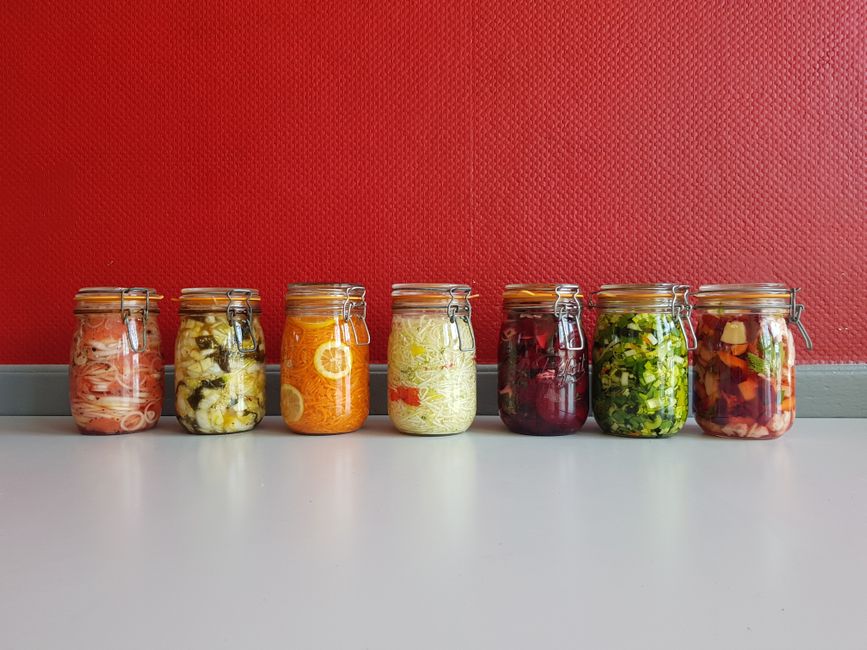
Walk into Amaïa Market on 7th Street on any given Saturday morning and you'll find a refrigerated case stocked with eight varieties of locally produced kimchi, three strains of raw sauerkraut, and a rotating selection of water kefir. A year ago, that case held two options. Demand, the store's buyers say, has roughly tripled since January.
Gut health — specifically the care and feeding of the roughly 38 trillion microbial organisms living in the human digestive tract — has moved from fringe nutrition circles into mainstream Phoenix conversation. Gastroenterologists at Banner University Medical Center have reported a steady uptick in patients asking specifically about dietary strategies for microbiome support. Registered dietitians across the Valley say fermented foods are now among the top three topics clients raise unprompted, alongside protein intake and blood sugar management.
The timing makes sense. A 2024 meta-analysis published in Cell Host & Microbe — covering data from more than 18,000 participants across 14 countries — found that people who consumed at least one serving of fermented food daily showed measurably greater gut microbiome diversity compared to those who did not. Diversity, researchers note, is generally considered a marker of a resilient and well-functioning digestive system. That study gained significant traction in clinical nutrition circles through late 2025 and has been cited in continuing-education materials distributed to Arizona dietitians this spring.
Not all fermented products are created equal. Shelf-stable pickles and most commercial yogurts are heat-treated after fermentation, killing the live cultures that deliver microbiome benefits. What you want is clearly labeled: "live cultures," "raw," or "unpasteurized."
Amaïa Market (7th Street and Camelback) stocks Sonoran Cultures kimchi, produced in a small-batch facility in the Garfield neighborhood. A 16-ounce jar runs $11.50. The shop also carries Tempe-based Desert Flora's miso paste — a white shiro variety and a longer-aged red — priced between $9 and $14 depending on weight. Both are genuinely fermented and shelf-stable only because salt acts as the preservative, not heat.
For kombucha on draft, Greenhouse Modern Kitchen in Arcadia carries four house-brewed flavors on tap, including a ginger-lemon and a hibiscus variety. A 16-ounce pour is $6. The brewery uses a two-stage fermentation process and does not pasteurize before kegging, which means the live Acetobacter and Saccharomyces cultures survive into the glass.
The Roosevelt Row Farmers Market, held every Saturday from 8 a.m. to 1 p.m. on Roosevelt Street between 5th and 6th avenues, hosts three vendors currently selling fermented products: a kefir cheese maker, a lacto-fermented hot sauce producer, and a stand specializing in beet kvass — a Slavic fermented beet drink that has quietly developed a following among endurance athletes in the Ahwatukee running community.
One practical note worth flagging: if you've eaten very few fermented foods up to this point, introducing too much too quickly can cause bloating, cramping, or loose stools. Nutrition professionals generally advise starting with one small serving per day — two to three tablespoons of sauerkraut, for example, or a four-ounce pour of kombucha — and increasing gradually over two to three weeks. People with compromised immune systems, those on immunosuppressive medications, or anyone with a serious underlying gastrointestinal condition should speak with a physician before making significant dietary changes. The Banner Health network maintains a registered dietitian referral line at 602-747-4000 for Valley residents.
The broader point is straightforward: the options exist right now, are mostly affordable, and are increasingly available outside specialty health stores. Whole Foods on Camelback Road added a "Live Cultures" shelf tag system in May to help shoppers distinguish genuinely fermented products from pasteurized imitations. The Phoenix Co+op on 7th Avenue has stocked raw cultured dairy since 2021 and expanded that section by 30 percent in its March 2026 restock.
The gut health conversation has arrived in Phoenix. The fermented food infrastructure to support it largely already has, too.

Wellness

Wellness

Wellness

Wellness
About this article
Published by The Daily Phoenix
Spread the word
Daily brief
Free, in your inbox before 7am. Weekdays.
The Daily Network — local news across Australia