Wellness
Journaling as a Mindfulness Tool: How to Start
Phoenix's wellness community is turning to pen and paper as a surprisingly powerful antidote to screen fatigue and summer stress.
4 min read
Updated 1 h ago
Wellness
Phoenix's wellness community is turning to pen and paper as a surprisingly powerful antidote to screen fatigue and summer stress.
4 min read
Updated 1 h ago
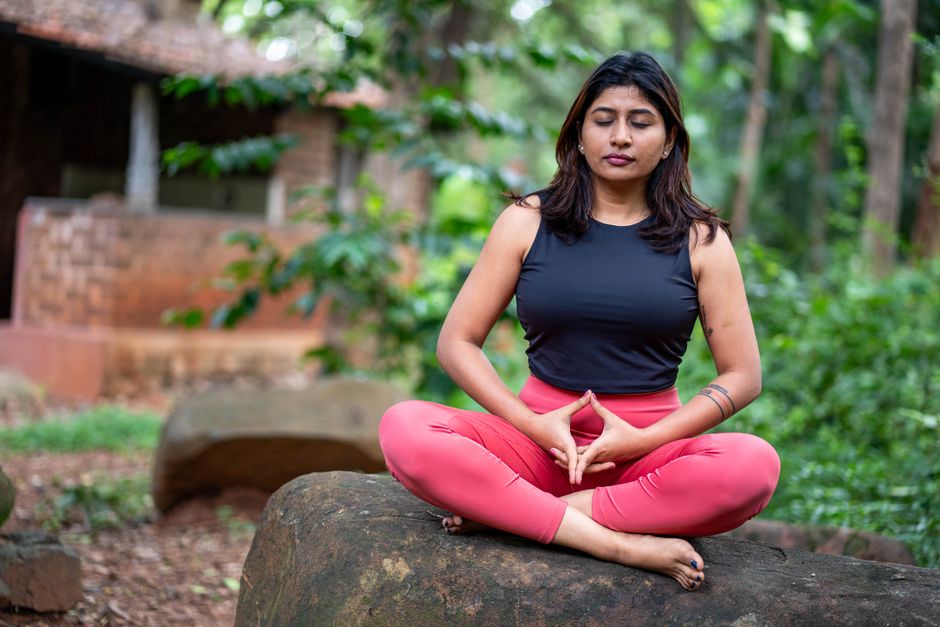
More Phoenix residents are picking up notebooks instead of scrolling through phones, and the shift is showing up in local studio sign-up sheets. Journaling — long dismissed as a teenage diary habit — has become one of the most recommended entry points into mindfulness practice, and instructors across the Valley say demand for structured journaling workshops has roughly doubled since the start of 2026.
The timing is not accidental. This summer has brought relentless heat to the Southwest, and with it the particular psychological grind that comes from being driven indoors for weeks at a stretch. When outdoor runs and patio yoga sessions get pushed back by 115-degree afternoons, people look inward. Mental health professionals and wellness educators alike point to a documented spike in anxiety during Phoenix's hottest months, and journaling is increasingly the low-barrier tool they recommend first.
The evidence behind expressive writing has been building for decades. Psychologist James Pennebaker's foundational studies at the University of Texas — the earliest published in 1986 — showed that writing about emotionally significant experiences for as little as 15 minutes over four consecutive days produced measurable improvements in mood, immune function, and stress markers. A 2023 meta-analysis in the Journal of Experimental Psychology reviewed 42 separate trials and found that structured journaling reduced self-reported anxiety symptoms in roughly 70 percent of participants. That number held across age groups.
The key word is "structured." Free-form venting on a page can sometimes reinforce negative thought loops. Practitioners increasingly use what's called "reflective prompting" — writing in response to specific questions rather than open-ended stream of consciousness. Prompts like "What am I grateful for that I haven't mentioned in three days?" or "What small thing went better than expected today?" redirect the brain toward a more observational, less reactive mode. That shift is the mindfulness mechanism at work.
Phoenix has genuine infrastructure for this. The Cactus Wren Wellness Collective on 7th Street in Midtown runs a six-week "Write to Reset" program — the next cohort starts July 14, with sessions priced at $195 for the full course or $38 drop-in. Participants receive a guided prompt journal printed locally by a Tempe-based bindery, and each 75-minute class pairs five minutes of breathwork with 30 minutes of prompted writing and a group reflection period. No prior meditation experience required.
Further north, the Arcadia Mindfulness Studio at the corner of 44th Street and Camelback Road has integrated journaling into its existing eight-week Mindfulness-Based Stress Reduction course, which follows the curriculum developed by Jon Kabat-Zinn at the University of Massachusetts. The studio charges $325 for the full MBSR program; sliding-scale spots are held for six participants per cohort. Their instructor team emphasizes that journaling is not assessed — there is no right answer, no grammar check, no sharing required unless a participant chooses it.
For those who want to go it alone first, the recommendation from most practitioners is simple: start with three prompts, not a blank page. Write the date. Write one thing you noticed with your body today. Write one emotion you have not yet named out loud. That's it. Do it for seven days before adding anything else. The consistency matters far more than the length — five minutes every morning outperforms an hour-long session once a week.
A standard dotted-grid notebook from any Changing Hands Bookstore location — the flagship is in Tempe, the second shop is in central Phoenix on Camelback — runs between $12 and $22 and works as well as any app. Researchers at the University of California, Los Angeles found in 2021 that handwriting activates more diverse neural networks than typing, which may explain why digital journaling apps, despite their convenience, consistently underperform pen-and-paper methods in clinical outcome studies.
The practical advice is to keep the bar low enough that skipping feels stranger than showing up. Set the notebook on your kitchen counter tonight. Write the date. See what comes next. Consult a licensed mental health professional if you find the process surfaces distress you're not equipped to sit with alone — Phoenix has strong community mental health resources, and journaling is a complement to care, not a replacement for it.
About this article
Published by The Daily Phoenix
Spread the word
Daily brief
Free, in your inbox before 7am. Weekdays.
The Daily Network — local news across Australia